Episode 3. Challenger Na Geonshin
Team Leader Seung-jin and Assistant Manager Su-min began exploring approaches to the bridge design.
“Because a road runs under the bridge, we’ll have to push the columns close to the buildings.”
“Well… that’s too ordinary.”
“Then how about using a steel frame and anchoring both ends to the buildings without any columns?”
“That’ll cost a fortune. The tail will end up bigger than the dog. And we’re not even getting a design fee for this.”
“Or we could open the ceiling and make it an open air bridge. Lower construction cost, almost no design work.”
“Sure, the main purpose is to simplify pedestrian flow, but sensitive lab gear and experimental materials have to move across, too. What if it rains?”
“Uh… right.”
In twenty years, Geonshin had seen and lived through this process countless times; Yeongjo Architects was no different.
Design planning is always a treadmill, an endless chicken game to find the best answer with no single right answer. Under the sun nothing is new, yet within the cycle of clichés you must create a brand-new cliché. It was an agonizing task.
Team Leader Mo Seung-jin fell into brief thought.
A design-pool meeting with just one assistant manager and one model-making temp was ridiculous.
“Damn, at this rate we’ll be dismissed as the trash section again tomorrow.”
Section 7: the notorious “dumping ground” Geonshin had heard all about.
They had never pulled off a magazine-worthy project, nor landed any truly profitable job. So Section 7 always got the vague, unwanted projects other section chiefs dumped.
But why was Mo Seung-jin, the bona-fide elite, stuck here? Once the ace of Division 1 Section 1, directly under the president, he too had been shoved down here after clashing with the boss.
Every job the dump-section handled must feel worse than death to him. Still, he was born a challenger: even in rotten conditions he wanted to succeed spectacularly. Being driven off once never meant tucking his tail and running.
“We can’t treat this purely as a structural or functional task. If that’s all, any local civil firm could do it cheap. We need something else. If we can’t persuade the old men at the design pool tomorrow, we can’t even take this proposal to KIST.”
Time ticked away, and Assistant Manager Su-min grew anxious. But what could two people do by tomorrow?
“…Storytelling.”
A small word popped out of Geonshin’s mouth.
Su-min tilted her head. “Sorry? Story what?”
Right, maybe that term isn’t familiar in 2002.
Team Leader Seung-jin scowled. “What nonsense is that in the middle of a meeting?”
“Well… I just thought this place needs some kind of story.”
“A story? Does this look like a film shoot to you?”
After a month of ever-lowering expectations, Mo Seung-jin’s patience was thin; overturning that in one go was tough. Yet if things stayed like this, Sam-in Architecture would surely snatch the project. Doing nothing wasn’t an answer.
Screw it. Just say it.
“No. I mean, architecture could become like film.”
“What bull. Architecture is architecture.”
“Because this is a research site, I thought it needs a story even more.”
“Sigh… Stop it. If you’re sleepy, go get coffee.”
Exactly the reply Geonshin expected.
Architecture in the 2000s was, after all, in transition. Life had grown too intertwined to keep buildings in a narrow “just building” frame. Give it a few years and architects would start worrying about architecture plus-alpha.
When Geonshin later became a team leader, new hires told him about assignments to translate movies into space, radical classes indeed.
Before his return, young architects had watched Director Robert Wiene’s The Cabinet of Dr. Caligari 1even if grudgingly. The 1919 German silent film is an early work of Expressionism, one avant-garde movement that would soon influence architecture deeply. Knowing the future, Geonshin understood how vital storytelling would become in architecture.
But blurting out, Architecture can be film! and People will study that connection in the future! right now would only earn a nutcase label.
“Um…”
Just then Su-min spoke hesitantly.
“Mr. Geonshin, we have to send a report on your internship here to your school and HR. There isn’t much to write, is there…?”
Team Leader Seung-jin shot her a dagger stare, then sighed at Geonshin.
“One minute. I’ll give you one minute. Ramble a bit, then go pour coffee. We can write that you did something.”
He clearly had no intention of listening.
And honestly, Geonshin could understand. After the month he’d had, anyone’s expectations would sink; even if he’d done assigned work well, what could they expect from a temp?
But that was when I really was twenty-three.
One minute.
For a regressed Geonshin, one minute was plenty, enough to change Section 7’s future.
“So this is the Korea Institute of Science and Technology, a group that narrows margins of error and hunts the closest approximation to the right answer.
If we consider what brain function these constant thinkers use least, it’s imagination. Put simply, when liberal-arts people imagine Superman, science types point out flying violates physics.
So what this campus needs is imagination. If we fill in what researchers lack most, they’ll perk up. I propose turning that into storytelling, an actual narrative, and translating it into space.”
Assistant Manager Lee Su-min parted her lips in surprise.
He speaks so smoothly.
Yesterday this temp couldn’t even cut foam well, barely managed a word; overnight he’d changed. Most stunned of all was Team Leader Seung-jin.
What is this?
To his own surprise, he found himself intrigued.
Pretending to be indifferent, he asked:
“So you want people to feel a story while crossing the bridge. That it?”
“Yes. Structurally we just make the bridge stable; functionally, it only has to move people. Since the existing buildings are old, any gimmick with form or color will look awkward. Bring a plain bridge and the client won’t need us. But if crossing it sparks researchers’ imagination, the bridge becomes a special space, not just a passage.”
What? A guy who makes models like that can read the client’s psyche… Still, not a bad idea.
Space—one of the most used words in architecture.
Our houses and buildings are clusters of spaces. Geonshin proposed turning a mere passage into a story-filled space. Look at Wes Anderson’s 2014 film The Grand Budapest Hotel: you’re not sure whether he made a movie or created a space. So what Geonshin claimed wasn’t impossible.
And, truthfully, Seung-jin felt a twinge of excitement.
“I think it’s an interesting idea,” Su-min broke the silence.
With nothing else, even this concept is a decent start.
She gave Geonshin a thumbs-up yet couldn’t ignore one concern.
“But will our elders accept this…? They’re conservative.”
However brilliant, if the design pool wasn’t convinced, it was useless.
Seung-jin gnawed his nail, staring at the site model.
The design pool was 8 a.m. tomorrow; no time left.
All or nothing.
“Temp. You’re an architecture major, you can make a PowerPoint, right?”
“Ah! Yes.”
“Then draft what story we’ll tell with Assistant Manager Lee and bring it straight to me.”
“Understood!”
“Team Leader, are we really going with this?”
“No.”
Both Su-min and Geonshin looked at him.
“We’re going to make it better than this.”
At those words Geonshin smiled.
Yeongjo is different having a team leader like that. Personality’s crap, but… Thinking back, even with that temper Seung-jin had a keen sense.
The next time Geonshin saw his name was years later during an all-nighter, at an international competition in Busan. He shoved famous foreign architects into second and third, taking first place. Though no longer with Yeongjo, he later made a name for himself and won the Korea Architecture Award. It was an ability he certainly had.
“Well? Got time to waste? Design pool’s tomorrow, move!”
“Yessir!”
As Geonshin stepped out, Seung-jin called:
“Temp.”
“Yes?”
“What’s your name?”
It’s been a month and you don’t know?
“Geonshin. Na Geonshin.”
“What did you say earlier? Don’t forget. You’re bringing me a site model tomorrow that’ll blow my mind. Na Geonshin.”
Only then did he recall that model promise. Offended by being scorned over a lousy model, he’d blurted, I’ll make one that’ll amaze you by tomorrow…
What a memory on him.
“Got it.”
It was already past midnight, yet the basement corridor was still bright; people were still working. But in the reality others wanted to escape, Geonshin began to feel exhilaration.
The thrill of truly practicing architecture.
He recalled Ando Tadao’s words:
Nothing ever went as planned at first; most attempts ended in failure… But if you clasp even the slightest remaining possibility, you can soon stride toward the next goal.
Can you believe he twice heard the word “cancer,” underwent multiple major surgeries? In trials that would make anyone give up, Ando always chose to remain a challenger rather than rest as a master.
In his second run at life, Geonshin rose again as a challenger. By chance or fate, he’d opened his eyes once more inside Yeongjo, and his first project had begun. Walking the corridor, he felt grateful to his future self who never quit architecture.
Yet as he neared the end of the hallway, one crucial fact flashed in his mind:
A few years from now, Yeongjo Architects would vanish into history.
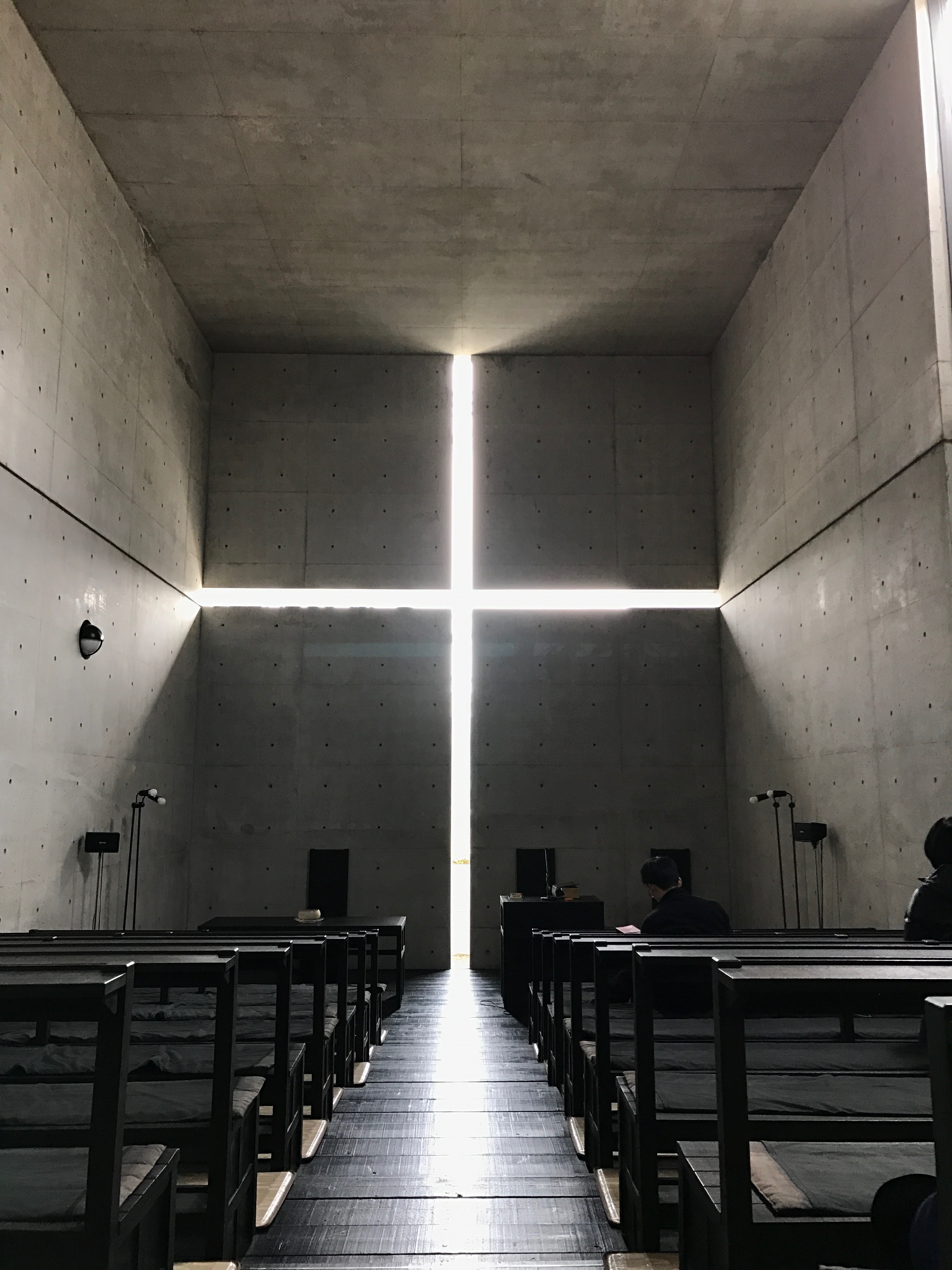
Tadao Ando
Signature work: Church of the Light (1989)
Tadao Ando often uses Zen philosophies when conceptualizing his structures. One theme he expresses in this work is the dual nature of existence.
- “The Cabinet of Dr. Caligari” is a classic German Expressionist silent film released in 1920, known for its distinctive visual style and psychological themes. ↩︎


Leave a Reply